Baseimmune at LBIC: Apex — A Year of Evolution, Refocusing, and Resilience
11 Jun 2026
)
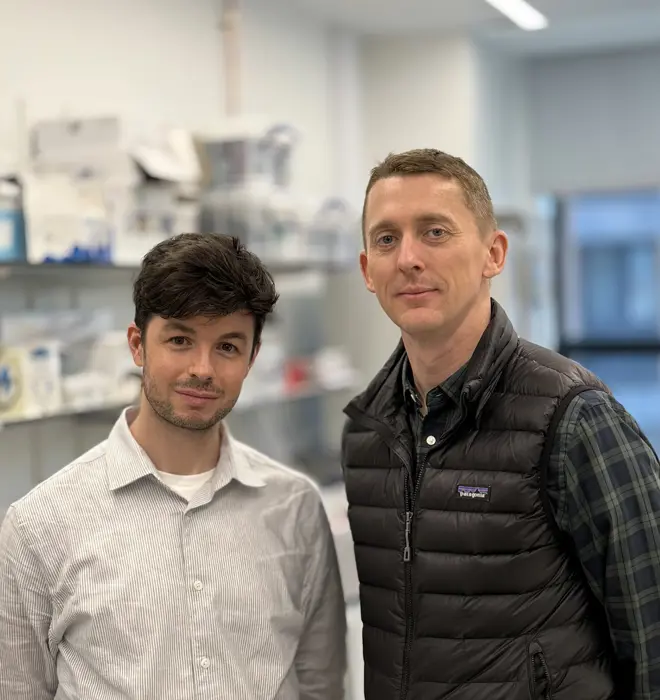
When Baseimmune first joined the LBIC ecosystem, the company was already driven by a very specific scientific conviction: that the most complex diseases cannot be treated through single‑target approaches alone. For co‑founder Dr Joshua Blight, this belief was formed long before Baseimmune existed, during his academic training at the Jenner Institute in Oxford and later at Imperial College, where he worked at the intersection of computational biology, immunology, and translational research.
At the Jenner Institute, he saw how computational modelling could bridge bench science and the clinic, allowing immune responses to be understood as systems rather than isolated pathways. Vaccines, he notes, remain the only intervention thus far to eradicate disease entirely. Yet he also became increasingly uncomfortable with what he saw as a simplification trend in drug development - the assumption that complex, adaptive biology could reliably be controlled by hitting a single molecular target.
That frustration became the intellectual foundation of Baseimmune: a platform built to combine multiple targets, model immune evolution, and deliberately engage biological complexity rather than ignore it.
Baseimmune was founded to prove that this philosophy could work in practice. The company’s early focus on infectious disease - including malaria and other global pathogens - allowed the team to validate the computational platform and generate early preclinical data.
By the time Baseimmune closed its last fundraise and began planning the move into LBIC: Apex, the platform itself had been scientifically validated. What remained unresolved was not whether the technology worked, but where it could have the greatest patient impact.
“Biology is complex so trying to fix it with a single target just feels like an oversimplification. We can hit multiple pathways at once, and that’s where the real impact lies.”
Joshua describes this as a pivotal internal moment: a recognition that a strong platform alone is not enough. Execution, disease context, and translational trajectory matter just as much as innovation.
.
)
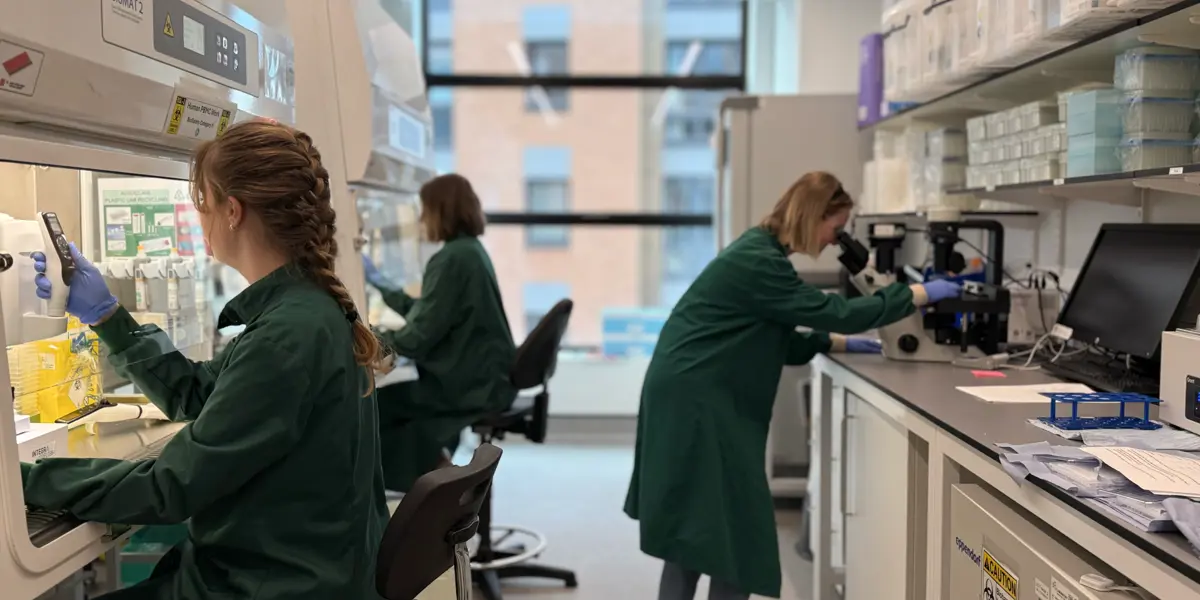
In 2024, Joshua described the LBIC ecosystem as the right environment for a company that wanted to focus on science rather than infrastructure. Building and running a private lab would have added cost, complexity, and operational distraction at a time when Baseimmune needed momentum.
That logic carried directly into the move to LBIC: Apex. The company had outgrown its previous space within the LBIC ecosystem and needed a larger environment that could support more sophisticated workflows and keep the team together. LBIC: Apex offered significantly more lab capacity, modern infrastructure, and the opportunity to operate as a single, cohesive organisation.
Importantly, Baseimmune chose to stay with LBIC not because LBIC: Apex was flawless, but because LBIC understood how real laboratories function. Trust, built over time, shaped that decision. What followed instead was one of the most transformative years in the company’s history.
“Now it’s about execution, using the platform to generate the right data, down-select the best candidates, and build a really strong proof of biology to take forward.”
Shortly after the move, Kevin Walton joined Baseimmune initially as Chief Business Officer and led a strategic review of the company’s direction. The conclusion was clear: fibrosis offered a more compelling translational and commercial opportunity; one better matched to both the platform’s strengths and the current landscape for biotech investment.
Internally, this triggered a deeper scientific re‑evaluation rather than a retreat. For Joshua, the question was not what Baseimmune should abandon, but where its platform could matter most.
That question led the company toward fibrosis, and ultimately to idiopathic pulmonary fibrosis (IPF) as its lead indication. IPF is a devastating disease with limited therapeutic options, short life expectancy, and approved drugs that offer only marginal benefit. It is also defined by biological redundancy and multi‑pathway dysregulation - precisely the type of challenge that single-target approaches have repeatedly failed to solve. Baseimmune’s platform, built to combine multiple antigens, model immune evolution, and engage biological complexity at a systems level, was a natural fit.
For them, the pivot was intellectually consistent with everything the company had learned to date. Fibrosis was not a change in philosophy, but the clearest application of it. Since making this shift, the company has rapidly advanced its fibrosis programmes, narrowing target selection and initiating focused preclinical studies to generate proof-of-biology data.
)
As the company evolved, Baseimmune’s leadership team was intentionally reshaped to align with its next phase of growth. Joshua formally stepped into the CSO role, while Kevin transitioned into the CEO position - a move designed to align leadership strengths with the company’s scientific and translational ambitions.
While such transitions are often perceived as disruptive, Joshua describes it differently: a deliberate and natural step to position the company for success.
Having led the company as CEO, Joshua developed a strong foundation in early-stage company building and execution. However, he recognised that, as Baseimmune entered its next phase, his greatest impact would be in driving the scientific vision and translational strategy. This reflects his long-standing focus on the science. Joshua and Kevin brought highly complementary strengths: deep investor experience, organisational discipline, and strategic execution.
Rather than creating disruption, the transition created clarity. Scientific decision‑making became sharper. Execution became more structured. And the company entered its next phase with leadership shaped to meet the next challenge ahead.
The pivot into fibrosis, leadership transition, and preparation for a new fundraising cycle all unfolded during Baseimmune’s first year at LBIC: Apex. In that context, the building’s greatest value was not optics, but stability.
The expanded lab space allowed new biological workstreams to begin without disruption. Being co‑located strengthened communication at a moment when alignment was critical. Light, openness, and modern design supported morale. This allowed the team to move quickly from strategy into execution, advancing fibrosis programmes without slowing momentum.
As with any new facility, there were early operational learnings, which LBIC addressed in a responsive and collaborative way. Joshua and Kevin are equally candid about cost. What mattered, however, was response rather than perfection. LBIC’s familiarity with laboratory workflows, responsiveness to issues, and willingness to advocate on Baseimmune’s behalf reduced distraction and kept the team focused on science.
As Baseimmune enters its next phase, the focus has shifted from space to capability. The team continues to execute against its core programmes, and scaling access to high-quality shared infrastructure will further accelerate progress. One recurring challenge Joshua highlights is access to advanced, reliable shared equipment. Technologies such as flow cytometry and advanced microscopy are essential for modern biology but are often difficult to access, poorly maintained, or administratively slow within academic settings.
The need is not simply equipment, but confidence: rapid booking, proper maintenance, and access to expert operators who de‑risk experiments rather than slow them down.
“Right now, it’s about building real momentum by generating the data, hitting our milestones, and making sure every step moves us closer to the clinic.”
Similarly, Baseimmune values curated engagement over generic networking. Joshua and Kevin are sceptical of broad social events. Instead, they see greatest value in small, stage‑appropriate forums like roundtables with investors, peer groups of CSOs or lab leaders, and structured environments where real knowledge exchange can occur without pulling teams away from core work.
)
Today, Baseimmune describes itself as “a new company built on a proven platform.” The organisation is fully committed to fibrosis, supported by a scientific advisory board deeply embedded in the field and a clear translational roadmap. LBIC: Apex has functioned less as a symbol and more as an anchor. It did not eliminate pressure, but it reduced noise. It allowed Baseimmune to rethink itself without losing momentum.
Over the next 12–18 months, the company is focused on advancing a focused fibrosis pipeline with a clear path to key development milestones, generating robust proof‑of‑biology data, progressing toward IND‑enabling studies, and preparing for a planned financing to support the next stage of development. Early work has already enabled prioritisation of lead programmes and established a clear experimental path to key inflection points. Communications, deliberately quiet during the transition, are beginning to re‑emerge in a controlled, strategic way. For them narrative ownership matters: the story must reflect what Baseimmune is now, not what it once was.
“This next phase is about disciplined execution. Delivering proof points, raising capital at the right time, and setting ourselves up for the next stage of growth.”
Baseimmune arrived at LBIC: Apex as a vaccine‑platform company preparing to scale. It now stands as a focused therapeutics company advancing a differentiated approach to fibrosis, with leadership aligned around execution and clinical impact. The transformation that made the next chapter possible has already taken place.
London BioScience Innovation Centre
2 Royal College Street
London
NW1 0NH
United Kingdom
Tel: +44 (0) 20 7691 1122